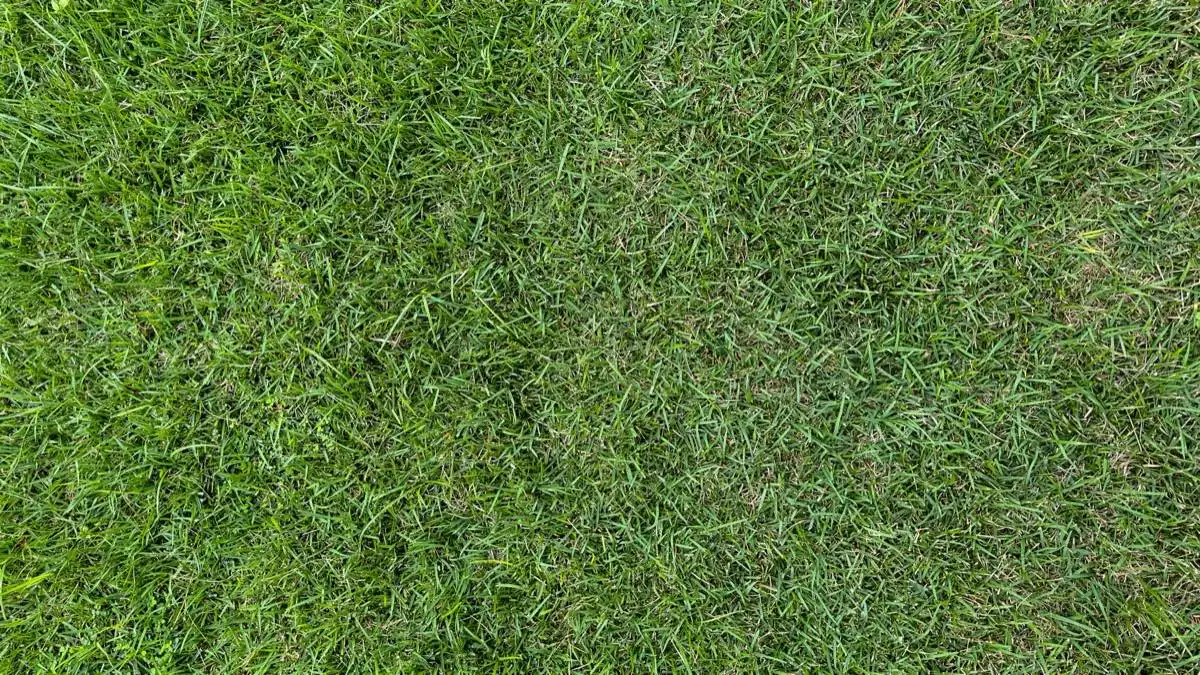
New sod needs water two to three times a day for the first two weeks, then once a day for a week, then two or three deep soakings a week. The first watering happens within 30 minutes of the last piece being laid, and it needs to be a heavy one.
Watering is the whole job. Sod is a living thing that has just had its roots cut off, and for about two weeks it is entirely dependent on you. Almost every failed sod installation we get called out to look at is a watering failure, not a product failure.
The schedule
| Stage | Frequency | Amount each time | Goal |
|---|---|---|---|
| First watering, day 0 | Immediately after install | 0.5–1 inch, soak it | Wet soil 3–4 inches beneath the sod |
| Days 1–14 | 2–3× daily in heat, 1–2× in mild weather | ~0.25 inch | Never let it dry out |
| Days 15–21 | Once daily, longer run | ~0.5 inch | Push roots deeper |
| Days 22–28 | Every other day | ~0.5 inch | Begin weaning |
| Week 5 onward | 2–3× per week | ~0.5 inch, or 1 inch weekly total | Deep, infrequent, established |
Adjust for weather rather than following the calendar blindly. A 104-degree week means more. A cool, cloudy stretch means less.
Day zero matters more than any other day
The first watering has to happen as the crew is finishing, not that evening. Sod harvested with about an inch of soil and stacked on a pallet has been losing moisture the whole time, and dry sod shrinks — which is what opens those gaps at the seams that never quite close.
Soak it. Not a rinse. You want water moving through the sod and into the prepared soil beneath, three to four inches down. On a normal sprinkler system that is often 30 to 45 minutes per zone, considerably more than a normal cycle.
Then check it with a screwdriver. If a long screwdriver pushes easily through the sod and four inches into the soil, you are there. If it stops, water more.
The screwdriver is the whole diagnostic
Forget guessing by look. Sod can look green on top while the soil beneath it is dry as a brick.
A long flathead screwdriver pushed straight down will slide through moist soil and stop at dry soil. Do this in three or four spots — including the hottest corner and the area farthest from a sprinkler head — before and after watering. It takes ninety seconds and it tells you what a moisture meter tells you for free.
Also lift a corner every couple of days for the first week. The underside should be dark and damp. If it is dry and the soil below is dry, you have a coverage problem, not a duration problem, and running the same zone longer will not fix it.
Coverage problems are the usual culprit
The most common failure is not "I did not water enough." It is "I watered plenty and one part of the yard never got any."
Look for:
- The strip along a driveway or south wall, which gets radiant heat from the concrete and dries hours faster than the middle of the yard
- Gaps between sprinkler heads. Coverage should be head-to-head, each head throwing all the way to the next
- Blocked or misaligned heads now that the sod has changed the grade
- Wind drift on a spray system in an exposed yard
- Sloped areas where water runs off before soaking in — split those into two shorter cycles half an hour apart
Put a few tuna cans out and run a zone for fifteen minutes. If one can holds twice what another does, your problem is distribution.
Overwatering, which starts around week three
For the first two weeks it is genuinely hard to overwater sod. After that it becomes easy, and it does real damage.
Permanently saturated soil has no air in it, and roots need oxygen. Worse, if water is always available at the surface, the roots have no reason to go looking deeper — so you get a lawn with a two-inch root system that collapses the first time you go away for a weekend in August.
Signs you have gone too far:
- Ground feels spongy or squelches underfoot
- A sour, swampy smell
- Water standing more than an hour after a cycle
- Mushrooms
- Yellowing that looks like drought but is not, and gets worse when you water more
The whole point of tapering is to train roots downward. Deep and infrequent from week five onward is not just water conservation. It is what builds a lawn that survives.
The tug test, and what happens next
At day 10 to 14, grab a corner of a piece and pull gently upward.
Lifts like a rug: not rooted. Stay on the establishment schedule and check again in three days.
Resists: roots have knitted into the soil. Begin the taper, and you can take the first mow.
First mow rules: mow at the highest setting, make sure the blade is sharp, never remove more than a third of the leaf blade in one pass, and skip watering that morning so the mower does not rut the soft ground. Our guide to how long sod takes to root covers the timeline in more detail.
Stay off it
Two weeks of no foot traffic, no dogs, no wheelbarrows. Walking on unrooted sod pushes it out of contact with the soil and creates air pockets, and an air pocket under sod is a dead patch waiting to appear.
This is the rule people break because the lawn looks finished on day two. It is not finished. It is a green rug that has not yet decided to stay.
When you should not call anyone
This is a genuinely DIY job. Watering new sod does not require a professional, it requires a schedule and a screwdriver. Set irrigation timers before the sod arrives, put a reminder on your phone for the midday cycles, and you will be fine.
Where a call is worth it: if you are going to be traveling during the first two weeks, do not install sod. Move the date. There is no watering schedule that survives an unattended house in July, and no amount of money spent on premium turf compensates for four missed days.
If a section browns despite good watering, that is usually a coverage problem or a grade problem — water running off rather than in. Our guide to preparing a yard for sod covers the grading side.
Amarillo Elite Sod & Turf installs Bermuda sod and other warm-season varieties across Amarillo and the Texas Panhandle, with the soil prep and grading that make watering work rather than run off. We will also hand you the schedule in writing on install day, because it is the part that decides everything.
Get a free quote → · call (844) 511-2320
Ready for a free quote in Amarillo?
Amarillo Elite Sod & Turf — free estimate, clear scope, no pressure. Use the form on this page or jump to the homepage quote.
Related services in Amarillo
Amarillo Elite Sod & Turf money pages — go straight to the service you need.
- Bermuda Sod →
Bermuda sod is the toughest, thirstiest-in-reverse lawn you can grow in Amarillo, and the only thing standing between it and a clean record here is winter. We install the cold-hardy Oklahoma State lines — Tahoma 31, Latitude 36, NorthBridge and Patriot — because the Panhandle sits at the northern edge of Bermuda's comfortable range, and the southern cultivars sold two hundred miles down the road do not always come back in April.
- Land Grading & Leveling →
Land grading and leveling is the part of a lawn nobody sees and everything else depends on. We laser-grade Amarillo yards to a fall of roughly a quarter inch per foot away from the slab, fill the low spots and cut a route for water to leave, because standing water rots new sod no matter which variety goes on top of it.
- Topsoil & Soil Amendment →
Topsoil and soil amendment is what you are really buying when you buy a lawn, because the four inches under the grass decide almost everything that happens afterwards. Panhandle soil tests come back calcareous and alkaline — commonly pH 7.6 to 8.3 with free lime in the profile — which is exactly why brand-new turf goes pale yellow six weeks after install while the owner swears they fertilized it.
- Buffalo Grass Sod →
Buffalo grass sod is the only lawn on our list that was already growing here before anybody drilled a water well, and on the Southern High Plains that stops being sentimental and starts being practical. Buffalograss, Bouteloua dactyloides, is the native short grass of this exact prairie, it will hold a lawn on roughly half the irrigation a Bermuda yard wants, and we install it as sod in Prairie, Legacy, Density and Bowie.
- Kentucky Bluegrass Sod →
Kentucky bluegrass sod gives you a genuinely green lawn in March and November, which no warm-season grass in Amarillo will ever do for you. At 3,600 feet in zone 7a it is a legitimate choice rather than a stretch — the same grass that fails in Houston works here, because our winters are cold enough and our nights cool off.
Frequently asked questions
How often should you water new sod?
Days 1 to 14, water two to three times a day in hot weather, keeping the sod and the top few inches of soil beneath it continuously moist. Days 15 to 21, drop to once a day and water longer. Weeks four onward, taper to two or three deep soakings a week.
How much water does new sod need?
The first watering should be heavy — enough that the soil under the sod is wet three to four inches down, usually half an inch to an inch of water. Follow-up waterings are lighter, roughly a quarter inch each, but frequent. Depth on day one, frequency after.
What time of day should I water new sod?
First round early morning, then mid-morning and mid-afternoon as needed during establishment. Once the sod is rooted, water only in the early morning. Evening watering on established turf leaves the blades wet overnight, which is how fungal disease gets started.
Can you overwater new sod?
Yes, and it is a real problem after the first two weeks. Constantly saturated soil starves roots of oxygen and encourages them to stay shallow instead of chasing moisture downward. Signs are a spongy feel underfoot, a sour smell, standing water, and mushrooms.
How do I know if new sod is rooted?
The tug test. At around day 10 to 14, grab a corner and pull up gently. If it lifts like a rug, keep watering on the establishment schedule. If it resists, roots have knitted into the soil and you can begin tapering.
Should I water new sod if it rains?
Check before you skip. Push a screwdriver through the sod into the soil — if it slides in easily to four inches, you have enough. A brief shower wets the blades and almost nothing else, which fools plenty of people into skipping a watering that new sod could not afford to miss.
Local context
How this applies in Amarillo, TX
Every article here is written from sod installation work done in Amarillo and the Texas Panhandle, so the numbers reflect local labour, permit and material costs rather than a national average. Your own job can land either side of them depending on access, the condition of what is already there, and the materials you pick — Prairie buffalograss sod, Legacy buffalograss, Bowie buffalograss.
The way to turn any of this into a real answer is to have someone look at your actual situation. The free estimate is free, itemized and written down, with no deposit and no obligation. Call (844) 511-2320 or start on the Amarillo Elite Sod & Turf homepage.
Areas Amarillo Elite Sod & Turf covers
Amarillo first, then the surrounding communities of the Texas Panhandle. Each has its own page with local detail rather than a copy of this one:
- Pampa, TX — Gray County, population 16,867 at the 2020 census
- Hereford, TX — Deaf Smith County, population 14,972 at the 2020 census
- Canyon, TX — Randall County, population 14,836 at the 2020 census
- Dumas, TX — Moore County, population 14,501 at the 2020 census
- Borger, TX — Hutchinson County, population 12,551 at the 2020 census
- Dalhart, TX — Dallam and Hartley counties, population 8,447 at the 2020 census
Or jump to the full list of Amarillo services.
The Amarillo Elite Sod & Turf Team
Licensed sod installation pros in Amarillo, TX
Written by the Amarillo Elite Sod & Turf team — licensed, insured sod installation pros with 15+ years serving Amarillo, TX and the surrounding area.